§01 context
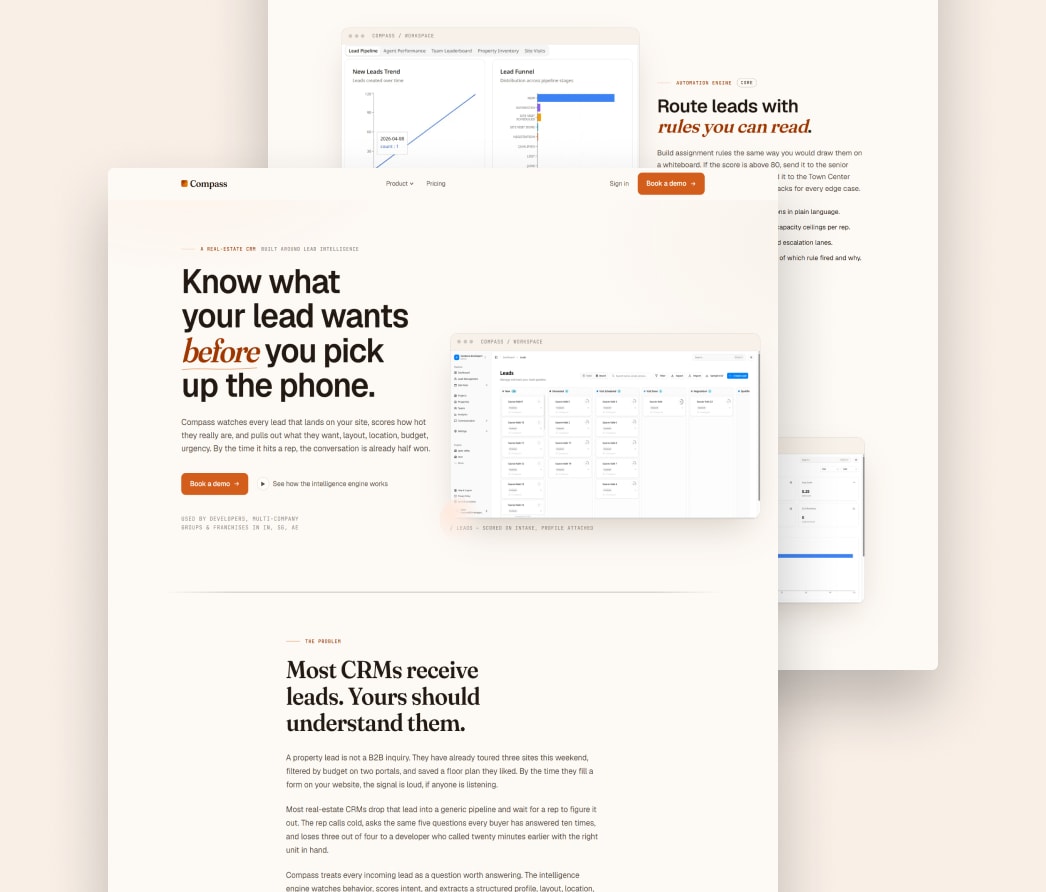
A lot of real-estate sales teams track leads in spreadsheets and their own heads. Compass is a CRM for them. A lead comes in, gets a score, gets assigned to someone, and gets followed up.
Each vendor gets its own isolated workspace. There's a separate platform app where tenants get provisioned and KYC and billing happen, and plans are enforced with per-tenant feature flags.
§02 shape
How it works
web (intake)   admin (vendor app)   super-admin (platform)
       └──────────────┬──────────────────┘
                      ▼
               nginx (TLS, routing)
                      ▼
          NestJS API ── tenant guards on every request
           │        │            │
           ▼        ▼            ▼
      Postgres   BullMQ      Ory Kratos / Hydra
(Prisma) workers (identity, OAuth2)§03 hard parts
The hard parts
- 01
Tenant isolation in guards
Tenant scoping happens in NestJS guards, not in each query. When I add a new endpoint it's already scoped, so there's nothing to remember. Plan limits get checked in the same place.
- 02
Using Ory instead of writing auth
Ory Kratos handles identities, magic-link activation and mobile OTP, and Hydra handles OAuth2. It's more containers in docker compose, but a lot less security code written by me.
- 03
Scoring and assignment
Lead scores come from PostHog events. Assignment goes through a small rules engine that follows each team's policies. Anything slow or scheduled runs on BullMQ.
stack
- NestJS
- Next.js
- PostgreSQL
- Prisma
- BullMQ
- Ory Kratos
- Ory Hydra
- PostHog
- Docker
next →
formiq
A backend for forms. You add the SDK, it stores the submissions and sends out the emails and webhooks.